eggchairs.com is for sale.Make an offer

A shape you
can sit inside

The story of the egg chair, from a clay model in a Copenhagen garage to hotel lobbies, film sets and living rooms all over the world.

Scroll

Since 1958

In 1958 a Danish architect was asked to furnish a hotel lobby. He gave every guest a small room of their own, shaped like an egg. Designers have chased the same idea ever since: a chair that shuts out the world without shutting you in.

Why the shape
works

Design

The egg chair looks like sculpture, but every curve has a job to do.

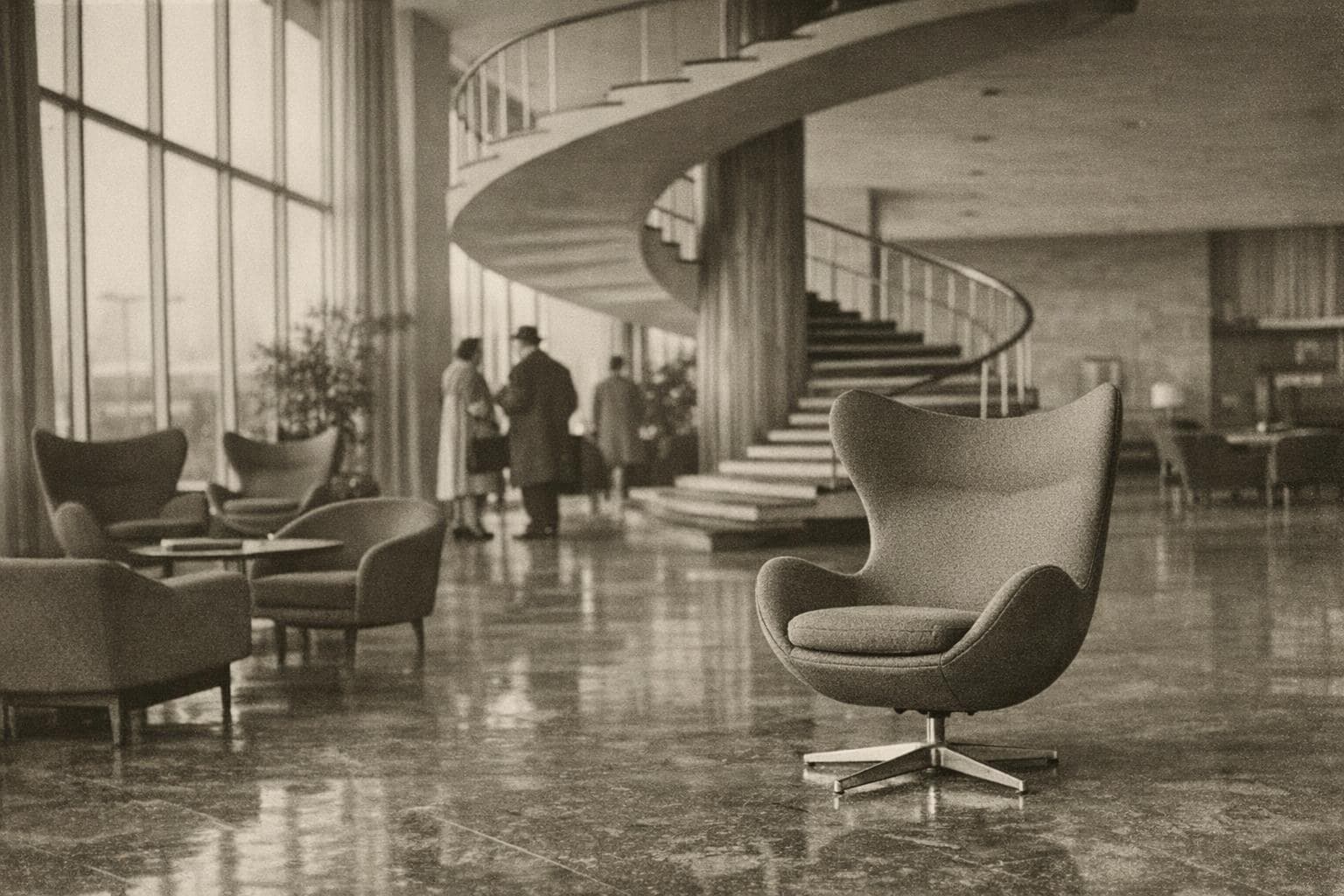
A modernist hotel lobby furnished with egg chairs
AI illustration

SAS Royal Hotel · Copenhagen · July 1960

It started with one building. Jacobsen designed all of it, from the tower to the cutlery, and the Egg was made for its lobby. Room 606 is still kept as he left it.

The egg,
year by year

History

From a clay model in a garage to film sets and garden swings: how the egg chair family grew, and why it keeps being copied.

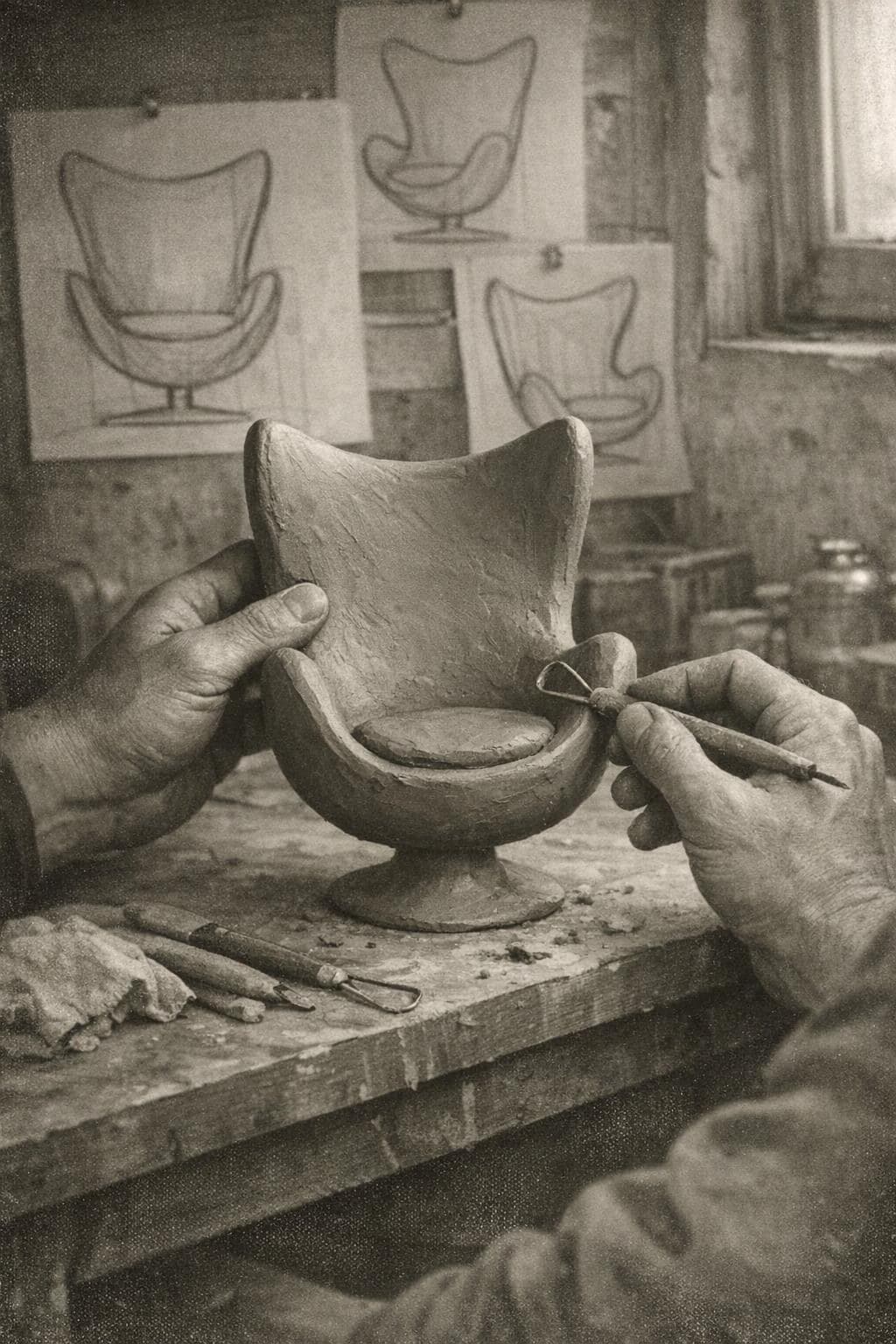
  1. Hands shaping a small clay model of a curved chair shell on a workbench
    AI illustration

    The Egg

    1958

    Arne Jacobsen · Denmark

    Arne Jacobsen was designing the SAS Royal Hotel in Copenhagen, and he designed all of it: the building, the lamps, the cutlery and the door handles. The lobby needed chairs that gave travellers some privacy in a big open space. He worked the shape out in clay in his garage, then had it made as one moulded shell, padded and upholstered so the seams follow the curves. Fritz Hansen put it into production, alongside its lower, open-armed sibling, the Swan.
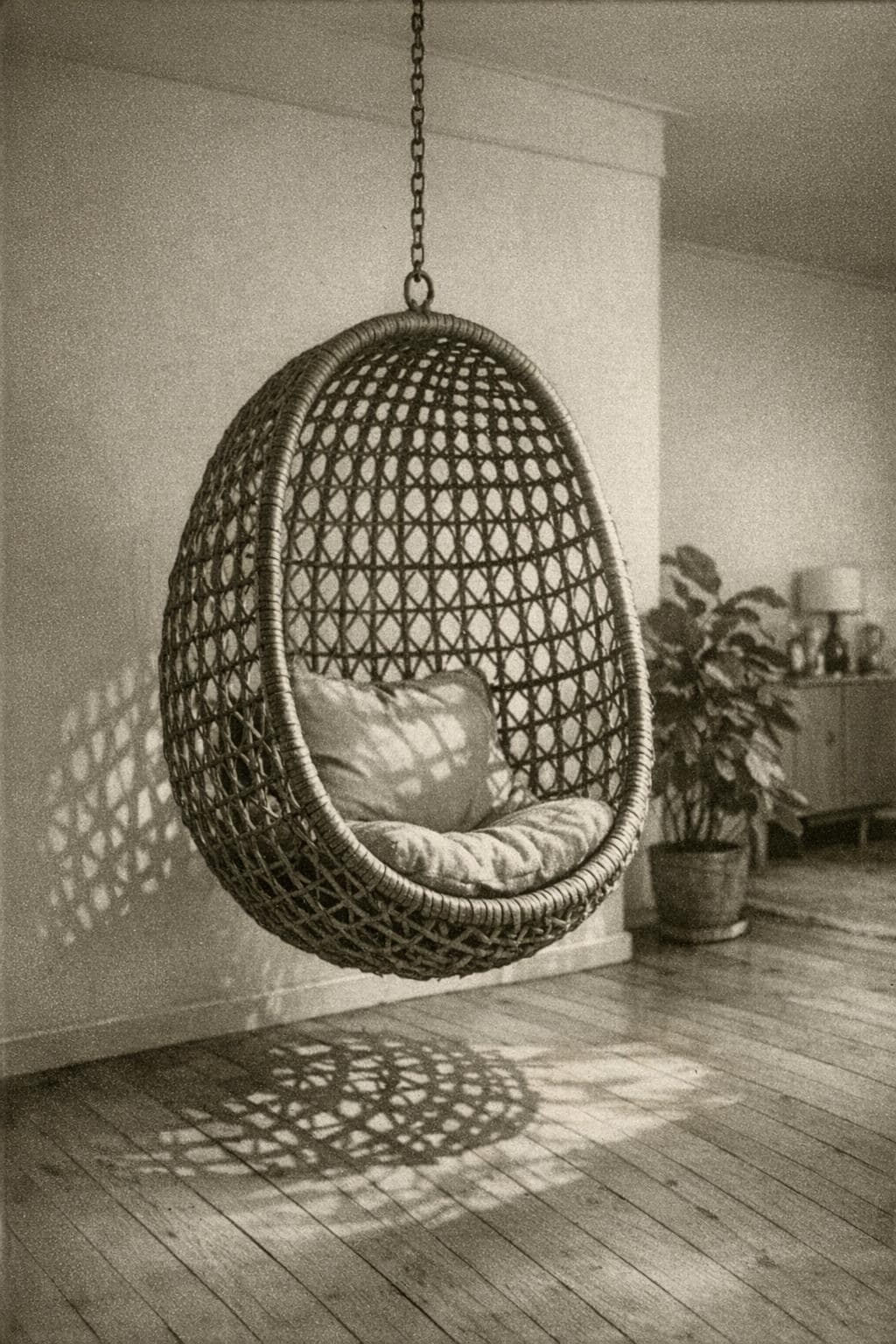
  2. A woven rattan egg chair hanging from a chain in a sunlit room
    AI illustration

    The Hanging Egg

    1959

    Nanna Ditzel · Denmark

    A year later, Nanna Ditzel took the egg off the floor. Her Hanging Egg Chair was woven in rattan by the Copenhagen wicker workshop R. Wengler and hung from a single chain, so light came through the weave and the sitter could sway. Almost every rattan egg swing sold for gardens today is a descendant.

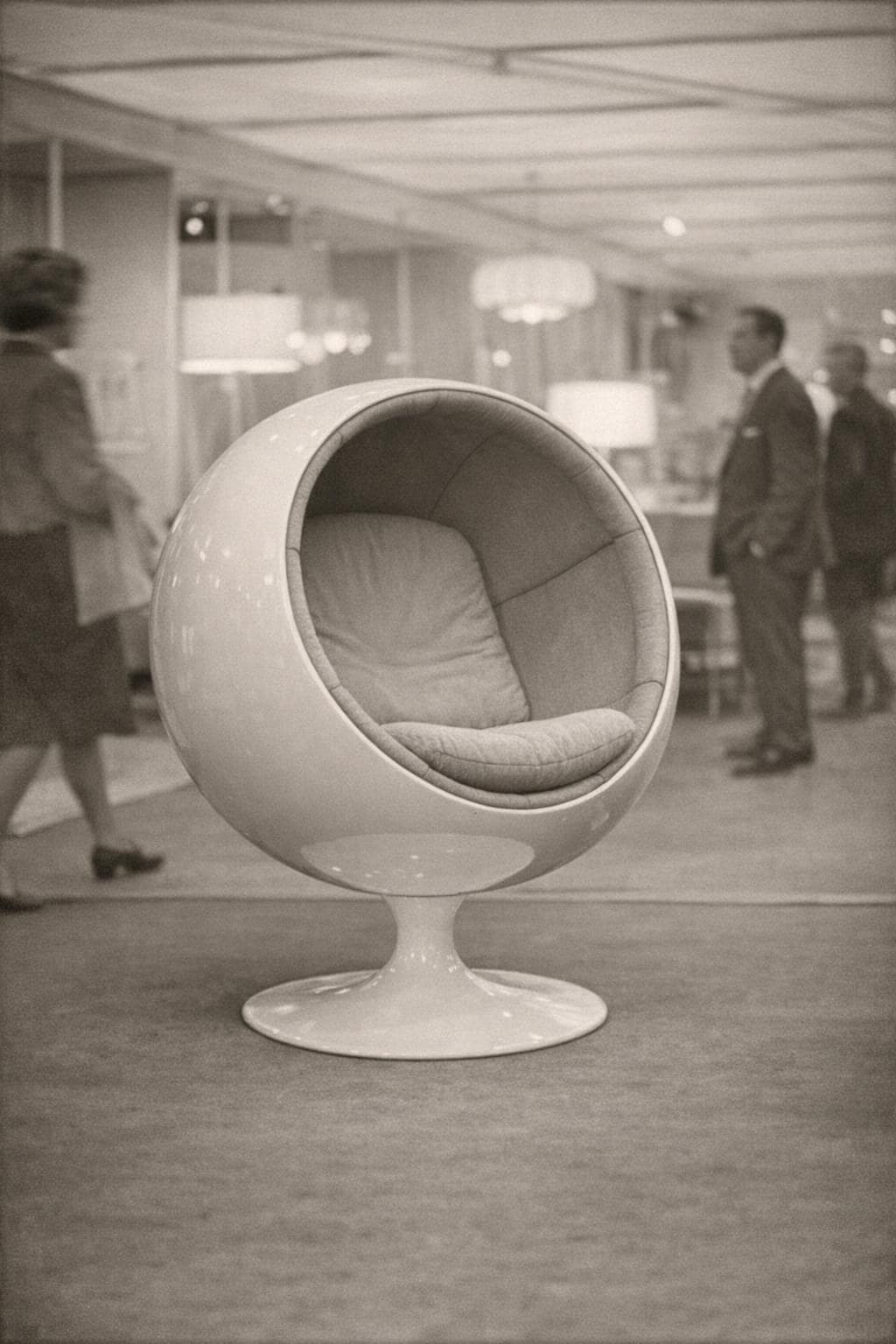
  3. A white fibreglass ball chair on a pedestal in an exhibition hall
    AI illustration

    The Ball

    1963

    Eero Aarnio · Finland

    Eero Aarnio wanted a big chair for his own home. He started from the simplest shape he could think of, a sphere, cut an opening in it and set it on a pedestal. Inside, the fibreglass shell muffles the room around you: a room within a room. The Finnish maker Asko showed it at the Cologne Furniture Fair in 1966, and it became an overnight sensation.

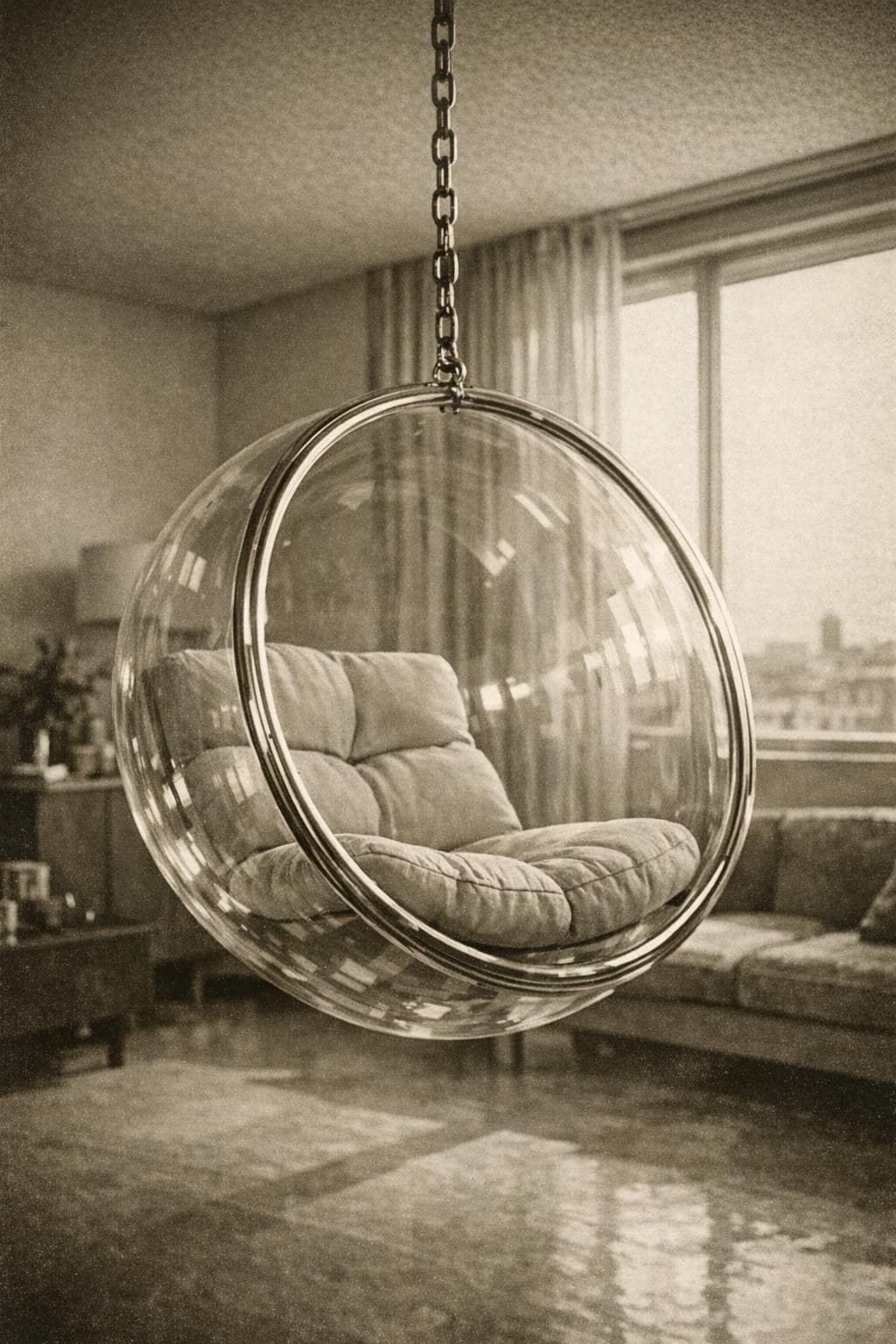
  4. A clear acrylic bubble chair hanging from the ceiling near a window
    AI illustration

    The Bubble

    1968

    Eero Aarnio · Finland

    Next, Aarnio wanted light inside the ball. A clear chair can't have a visible base without spoiling the effect, so he hung it from the ceiling. The Bubble is a dome of clear acrylic on a steel rim, with cushions inside. It looks as though it floats, which is the whole idea.

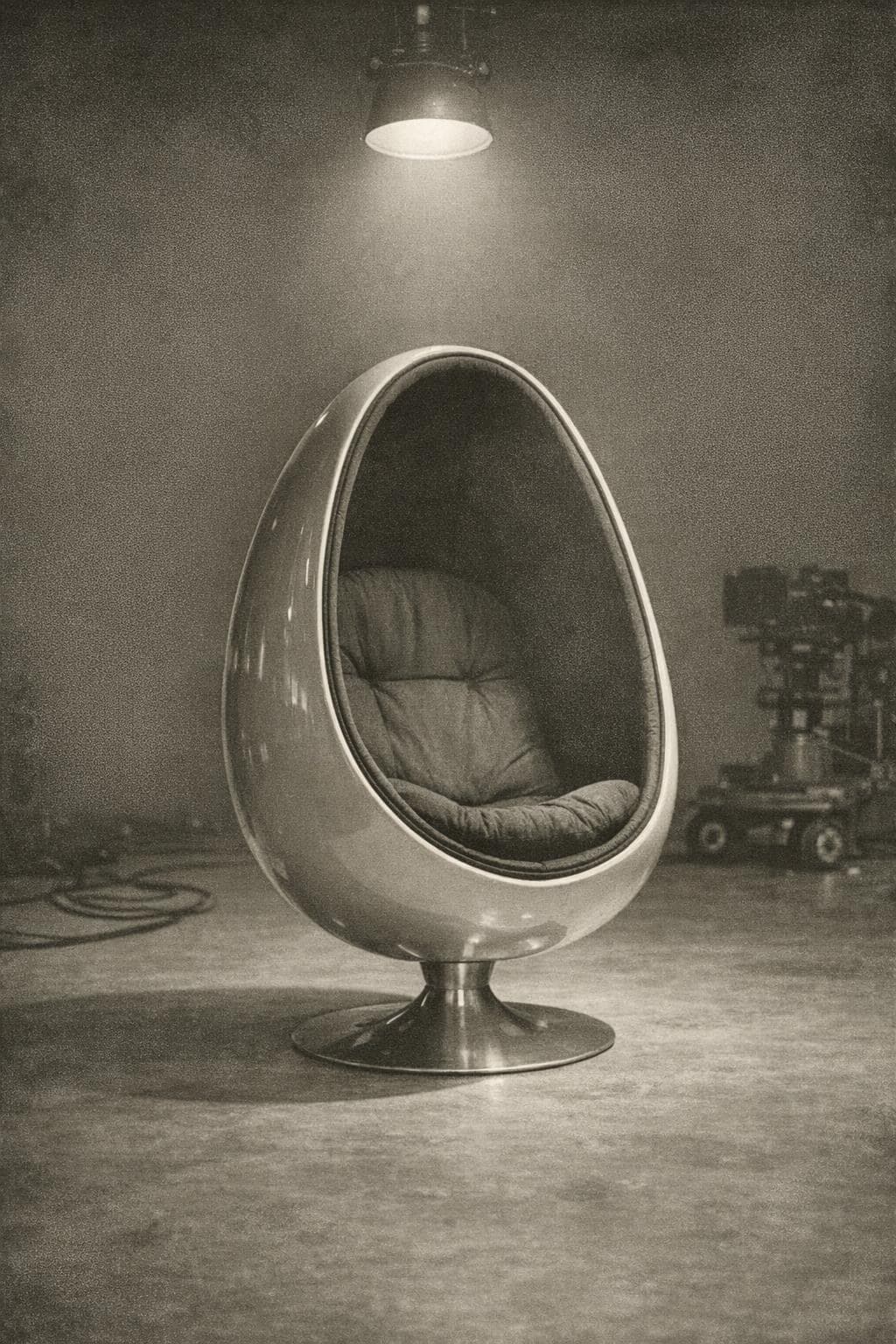
  5. A glossy egg-shaped chair on a swivel base under a studio spotlight
    AI illustration

    The Ovalia

    1968

    Henrik Thor-Larsen · Denmark

    Henrik Thor-Larsen had made plastic racing-car chassis and seats for the Saab Sonett before he turned to furniture. His Ovalia, shown at the Scandinavian Furniture Fair in 1968, is a glossy fibreglass egg on an aluminium swivel base. Production stopped in 1978. Then Men in Black put it on screen in 1997, and demand brought it back.

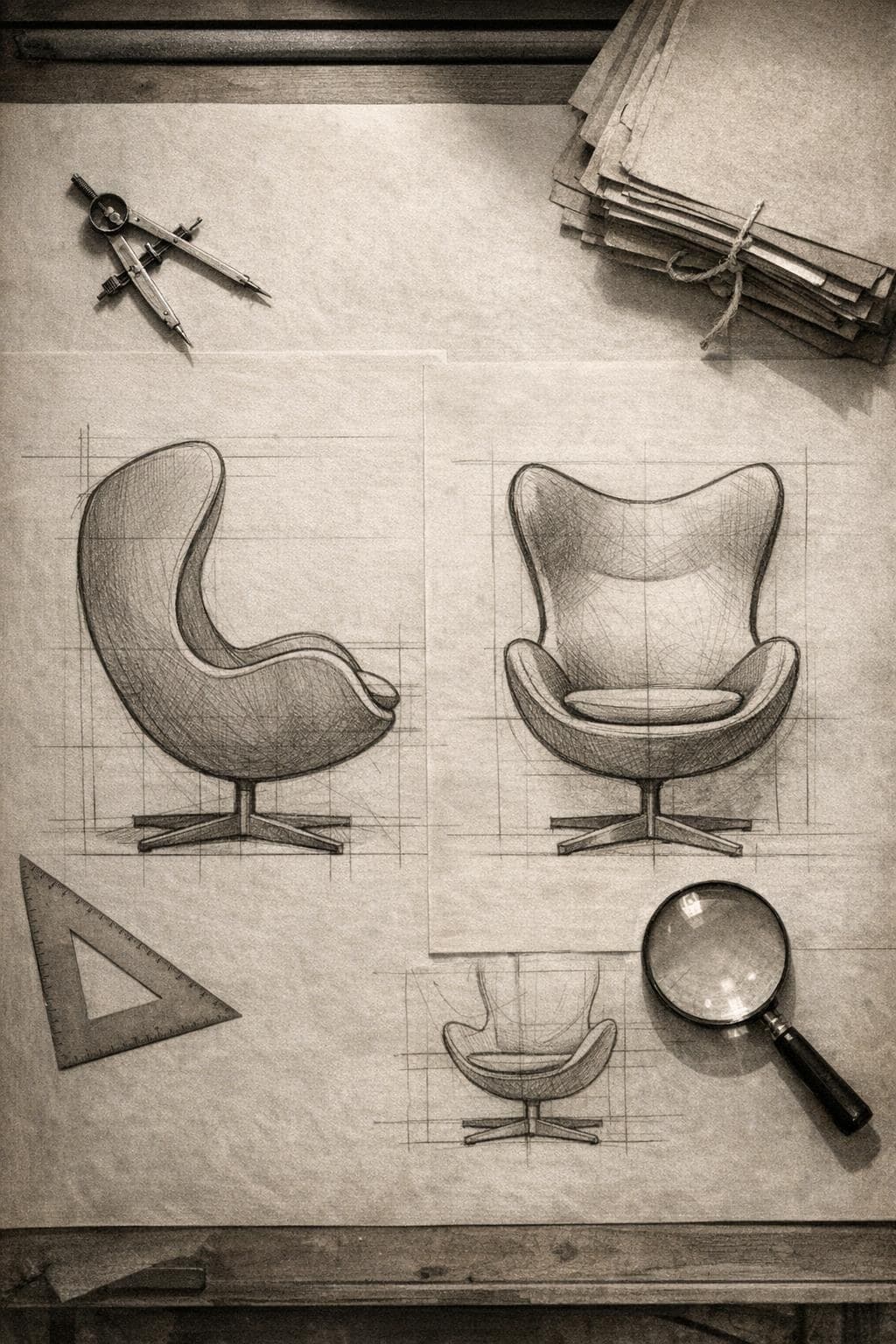
  6. Technical drawings of a curved chair on a drafting table
    AI illustration

    The law catches up

    2016

    United Kingdom

    For decades, UK copyright protected a mass-produced design for just 25 years, which is why replicas of classic chairs were legal and easy to find. On 28 July 2016 the repeal of section 52 of the Copyright, Designs and Patents Act took effect. Designs like the Egg are now protected for the designer's life plus 70 years. Jacobsen died in 1971, so in the UK his designs are protected until the end of 2041.

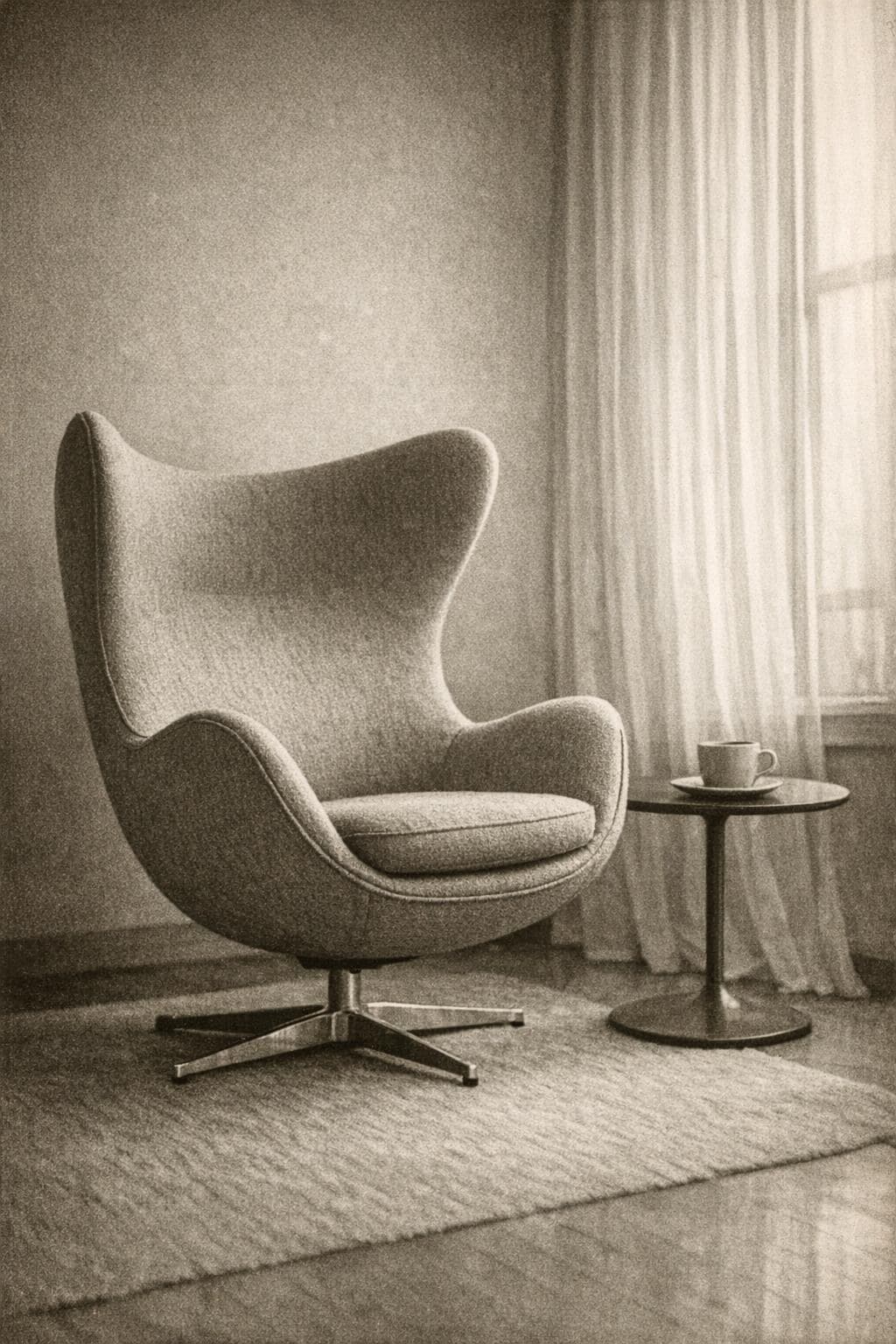
  7. An egg chair turned towards a tall window in a quiet modern room
    AI illustration

    Still made, still copied

    Today

    Today

    Fritz Hansen still makes the Egg, with the upholstery cut and sewn by hand. The shape has long outlived the hotel lobby it was drawn for, and it turns up in offices, airport lounges, film sets and living rooms. Most people have sat in one, or in something that wanted to be one.

Anatomy of an egg

How it's made

Four parts, each doing more than it seems. Together they make a chair that has barely changed since 1958.

The shell

01
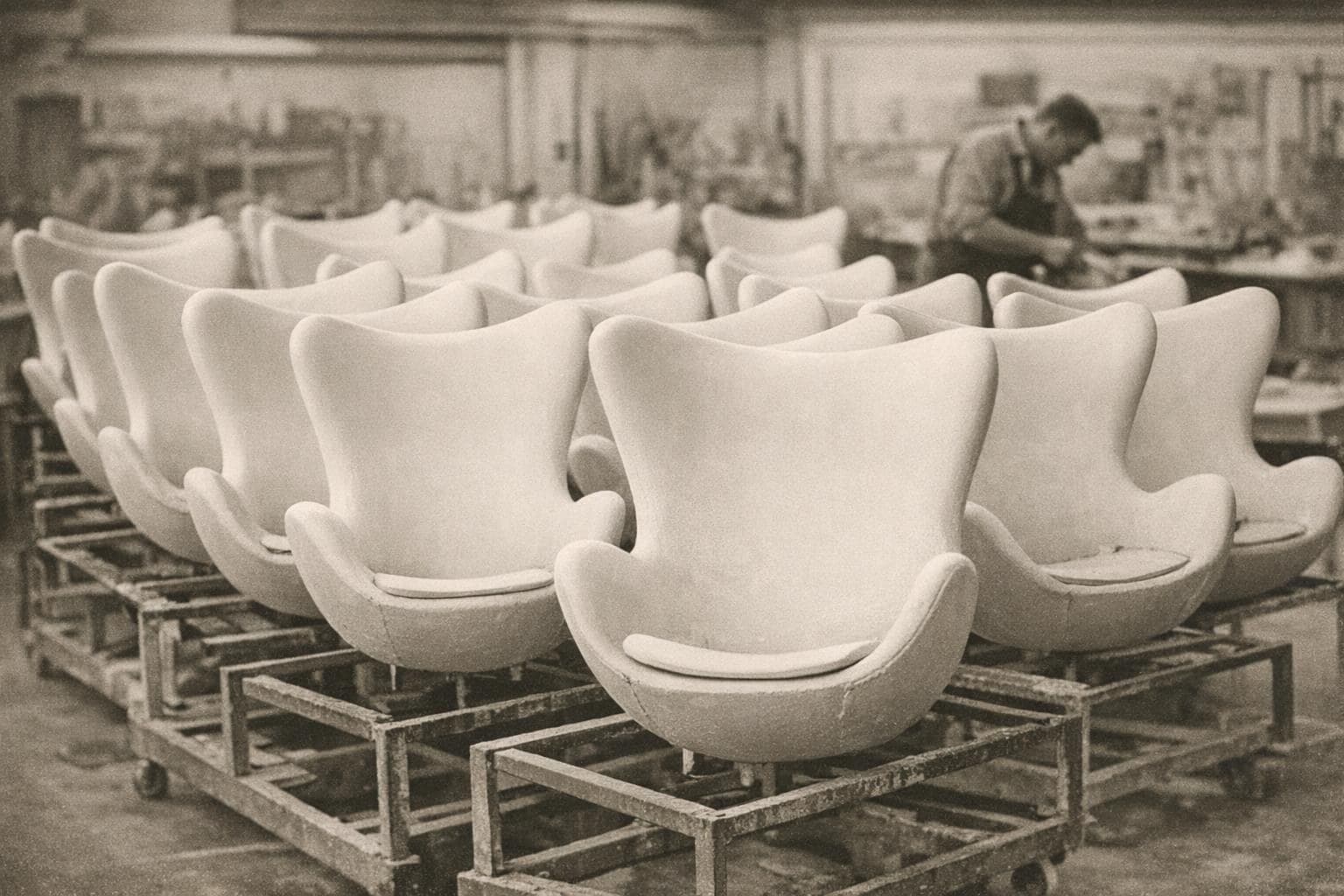
Rows of unupholstered chair shells in a furniture workshop
AI illustration

Moulded in one piece, with no straight lines and no visible joints. The shell gives the chair its stance: tall at the back, wide at the shoulders and tucked in at the seat.

The upholstery

02
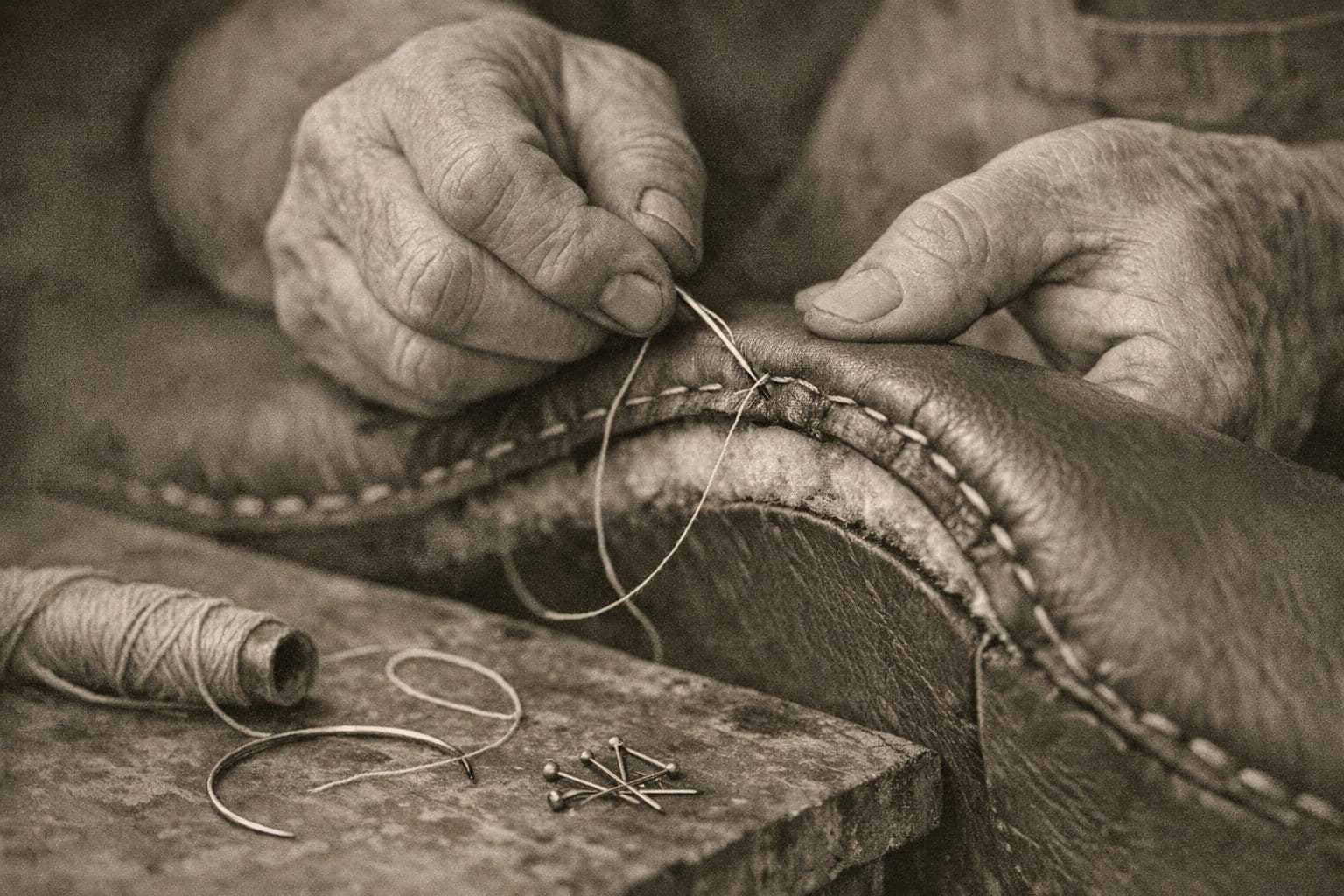
Hands stitching leather over the curved edge of a chair shell
AI illustration

Fabric or leather is cut in panels and sewn by hand so the seams trace the edges of the shell. On a good chair the seams are where your eye lands, so they have to be right.

The swivel

03
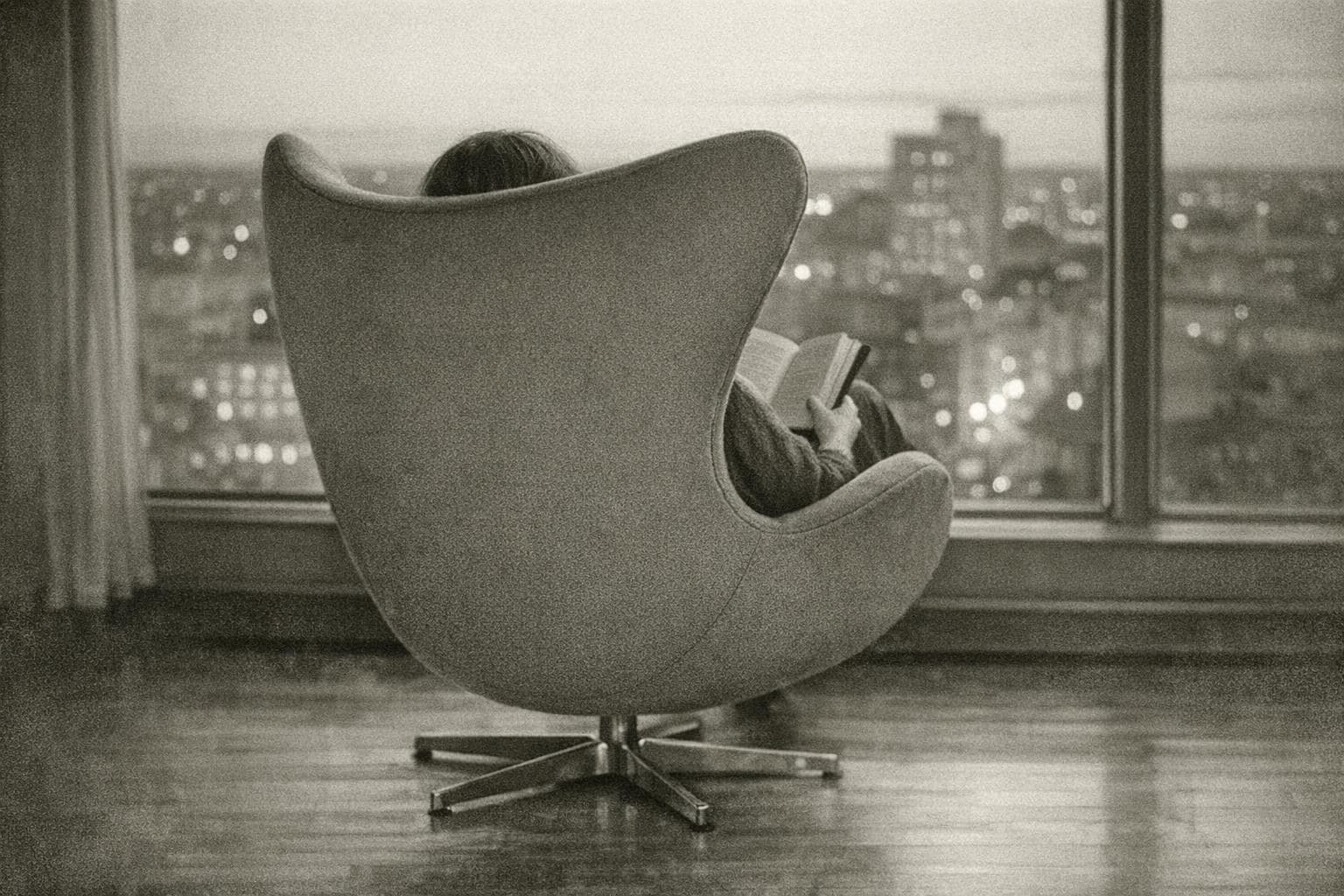
A person curled up reading in an egg chair turned towards a window
AI illustration

The chair turns on its base, so you can face the room or turn your back on it. The original also tilts, rocking back gently when you lean.

The star base

04
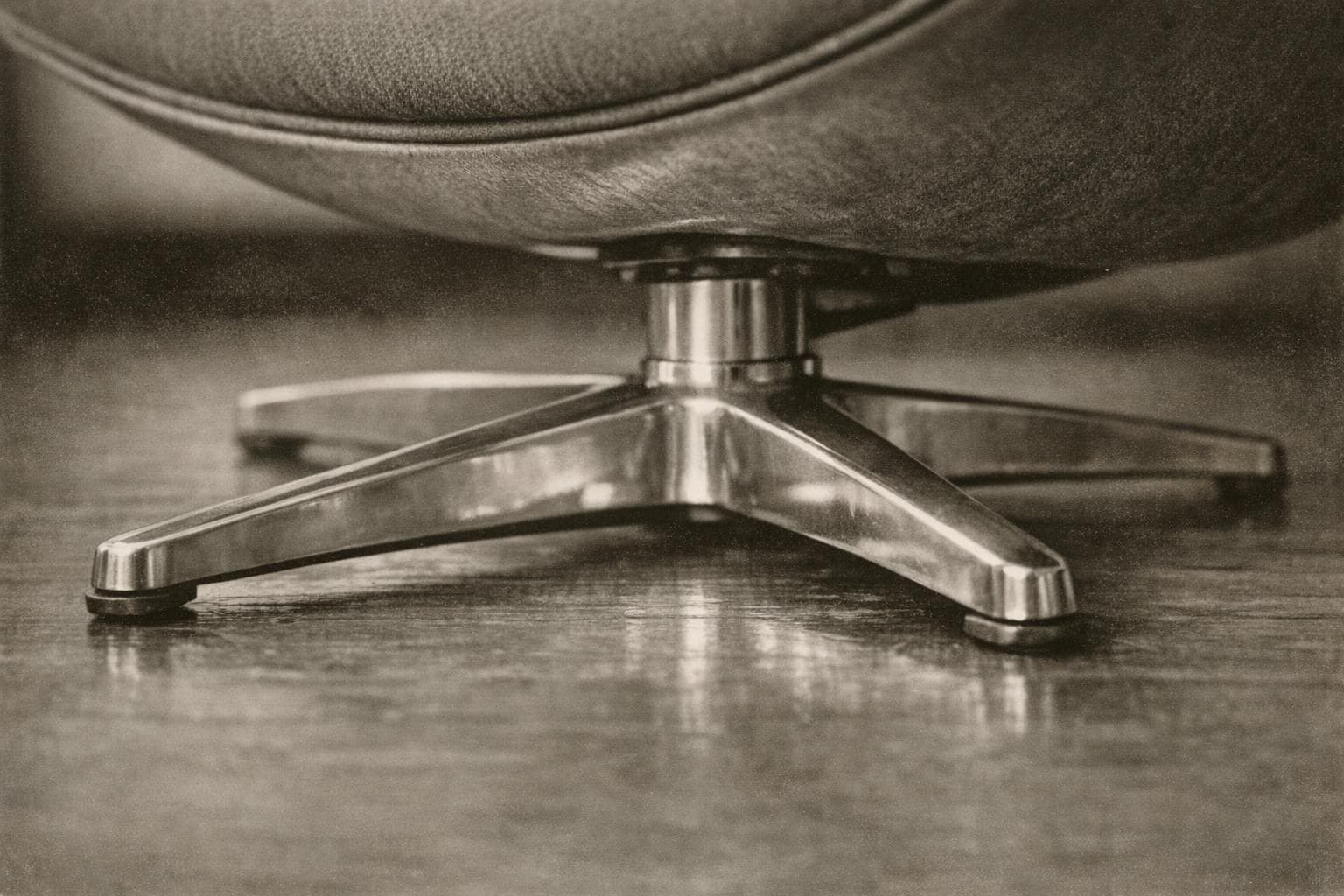
Close-up of a polished four-pointed aluminium chair base
AI illustration

Four polished aluminium legs set at right angles. They keep a top-heavy shape steady and let it turn without a wobble.

The rest is history

05

Most people have sat in one. Far fewer know who drew it first.

Now you do.

This domain
is for sale

Own the web address for one of the most recognised chairs ever made. We’ll consider serious offers for eggchairs.com.

Make an offer

Or email hello@ciosolutions.co.uk